You went to the doctor hoping to understand why pregnancy was taking longer than expected.
You answered a few questions. Discussed your menstrual cycle. Maybe underwent some tests.
And during the consultation, your doctor mentioned something called IUI.
You nodded.
But once you got home, the questions began.
“Is it like IVF?”
“Will it hurt?”
“Will I need to take injections?”
“And most importantly, what are my chances of getting pregnant?”
If you’ve been advised to consider IUI, it’s natural to have these questions.
Medical terms can sometimes make a simple conversation feel more complicated than it needs to be.
So, let’s understand what IUI is, how the treatment works, and what you should know before deciding whether it’s right for you.
First, What Exactly Is IUI?
IUI stands for Intrauterine Insemination.
That’s a long name for a relatively simple procedure.
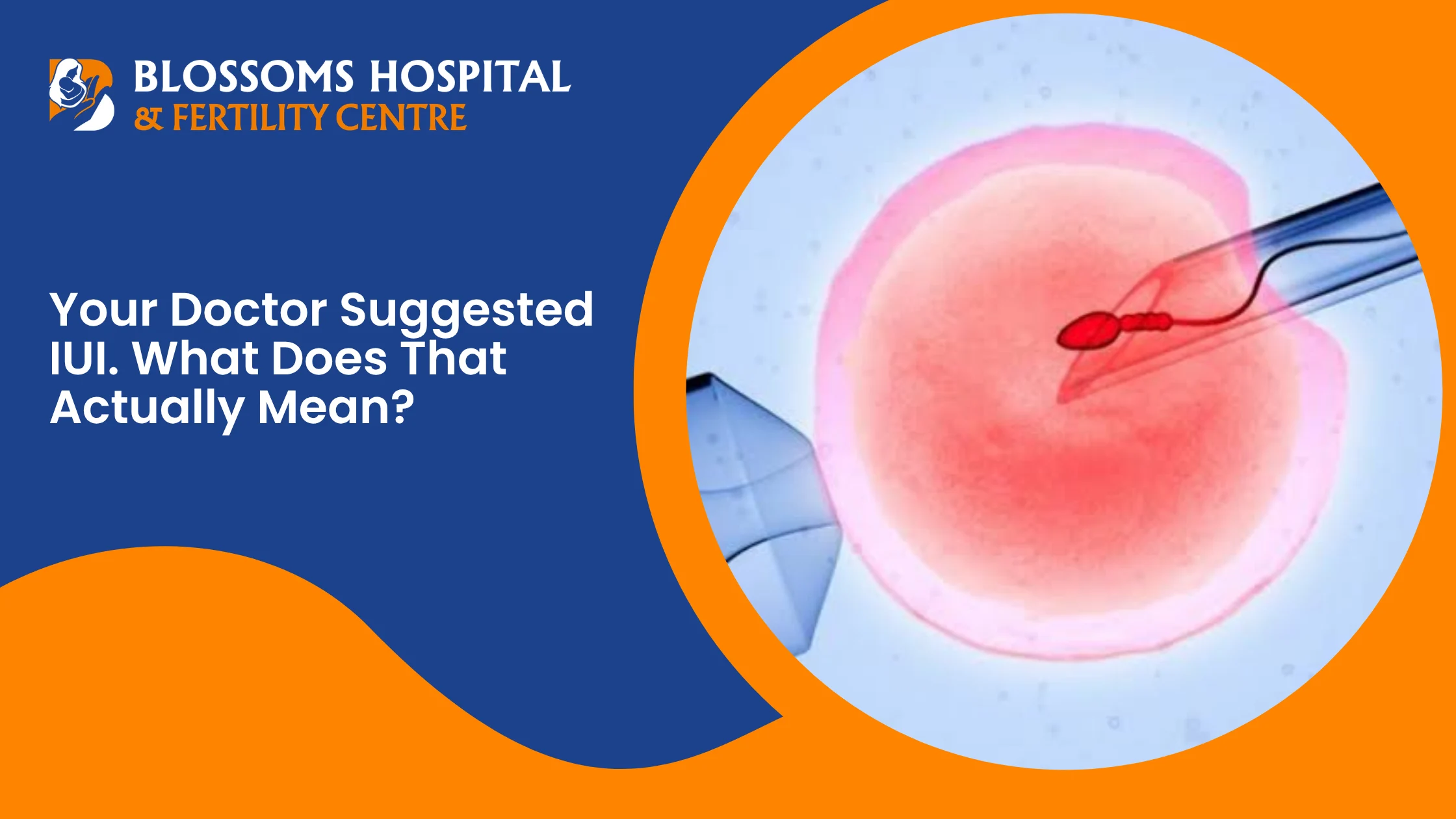
During IUI, a specially prepared sperm sample is placed directly inside the uterus, around the time an egg is released from the ovary.
In a natural pregnancy, sperm travel through the reproductive system to reach the egg.
With IUI, the sperm are placed closer to where fertilisation needs to happen.
The aim is to improve the chances of sperm reaching the egg.
But there’s something important to understand.
IUI doesn’t guarantee pregnancy.
Fertilisation still needs to happen inside the body, and several other factors affect whether pregnancy occurs.
That’s why your doctor first needs to assess whether IUI is a suitable option for you.
Is IUI the Same as IVF?
No. IUI and IVF are different treatments.
With IUI, fertilisation happens inside the body.
With IVF, eggs are collected from the ovaries and combined with sperm in a laboratory. An embryo is then transferred into the uterus.
IUI involves fewer procedures and is generally less expensive than IVF.
However, IUI also has a lower chance of pregnancy per treatment cycle than IVF.
This doesn’t mean one treatment is automatically better for everyone.
For some people, IUI may be a reasonable option to consider. For others, IVF or a different approach may be more appropriate.
Your age, test results, and reason for delayed conception all matter.
Who Might Be Advised to Try IUI?
Not every couple experiencing difficulty conceiving will benefit from IUI.
Your doctor may consider it in selected cases, such as certain ovulation-related problems, some sperm-related concerns, or when donor sperm is being used.
In some cases of unexplained infertility, IUI combined with fertility medication may also be discussed.
But the decision depends on several things.
For example, at least one fallopian tube generally needs to be open and functioning for IUI to work.
If both tubes are blocked, IUI is unlikely to help.
Similarly, severe sperm-related problems may make another treatment more suitable.
This is why an evaluation before treatment matters.
The goal isn’t simply to start a procedure.
It’s to choose one that has a reasonable chance of helping in your circumstances.
What Happens Before an IUI Procedure?
You won’t usually walk into a fertility clinic and undergo IUI on the same day as your first consultation.
There are a few things the doctor needs to understand first.
You may be advised to undergo an ultrasound, selected blood tests, or an assessment of your fallopian tubes.
A semen analysis may also be recommended when your partner’s sperm will be used.
Once the doctor has reviewed the results, the next step is to plan the treatment around ovulation.
Ovulation is the stage when an ovary releases an egg.
Timing matters because the sperm need to be present around this period for fertilisation to be possible.
Some women undergo IUI during a natural menstrual cycle.
Others may be prescribed medication to help with egg development and ovulation.
If medication is used, ultrasound scans may be needed to monitor how the ovaries are responding.
Your doctor will explain which approach is suitable for you.
What Actually Happens on the Day of IUI?
This is often the part people feel most nervous about.
But the procedure itself is usually quite short.
First, the sperm sample is prepared in the laboratory.
This process helps separate the sperm that are moving well from the rest of the sample.
When everything is ready, you’ll lie on an examination bed, much like you would for a routine gynecological examination.
The doctor gently passes a thin, flexible tube through the cervix and into the uterus.
The prepared sperm sample is then placed inside.
And that’s the main procedure.
It usually takes only a few minutes.
You don’t normally need general anaesthesia, and most women can return home shortly afterwards.
Your clinic will explain any specific instructions before you leave.
Does IUI Hurt?
For many women, IUI causes little or no pain.
You may feel some discomfort when the instruments are inserted, and mild cramping or spotting can happen afterwards.
Experiences vary from person to person.
If you’re worried about pain, tell your doctor before the procedure.
It’s also important to ask what symptoms are normal afterwards and when you should contact the clinic.
Although IUI is generally considered a safe procedure, there is a small risk of infection.
When fertility medicines are used, additional risks may include the development of too many eggs or a pregnancy involving more than one baby.
Your doctor should explain these risks before treatment.
What Happens After IUI?
Once the procedure is finished, the waiting begins.
And for many couples, this is the hardest part.
You might find yourself noticing every little change.
A mild cramp.
A feeling of tiredness.
A little discomfort.
Then comes the temptation to search online.
“Are these early pregnancy symptoms?”
The difficulty is that symptoms alone cannot tell you whether IUI has worked.
Some women experience cramping or spotting after the procedure. Others don’t notice anything unusual.
Your doctor will tell you when to take a pregnancy test, usually around two weeks after the procedure.
Testing too early can be misleading, particularly if certain fertility injections have been used.
Until then, follow the medication and activity instructions given by your treating team.
If you develop severe abdominal pain, significant bloating, faintness, breathing difficulty, or other concerning symptoms, seek medical advice promptly.
How Successful Is IUI?
It’s understandable to want a number.
You might ask your doctor, “What percentage of people get pregnant with IUI?”
But there isn’t one success rate that applies to everyone.
The chances of pregnancy depend on several factors, including:
- The woman’s age
- The reason for difficulty conceiving
- Sperm quality
- Whether the fallopian tubes are functioning
- How the ovaries respond to treatment
- Whether fertility medication is being used
For some couples, IUI offers a reasonable chance of pregnancy.
For others, the chances may be low enough that another treatment should be considered.
And even when everything looks favourable, pregnancy may not happen in the first attempt.
Instead of comparing your chances with a number you saw online, ask your doctor what results and expectations apply to your particular situation.
What If IUI Doesn’t Work the First Time?
A negative pregnancy test after IUI can be disappointing.
Especially when you’ve followed every instruction, attended every scan, and waited hopefully for the result.
It’s natural to wonder whether something went wrong.
But one unsuccessful cycle doesn’t necessarily mean the treatment was performed incorrectly or that pregnancy is impossible.
Your doctor may review how you responded to treatment, the timing of the procedure, and other relevant findings.
Depending on your circumstances, another IUI cycle may be considered.
Or the doctor may recommend discussing a different treatment.
There isn’t one fixed number of IUI attempts that’s right for everyone.
Age, diagnosis, previous treatment, cost, and personal preferences all influence the decision.
You should understand why continuing or changing treatment is being recommended.
Questions Worth Asking Before Starting IUI
If your doctor has recommended IUI, you don’t need to make a decision without understanding the details.
A few useful questions include:
“Why are you recommending IUI for us?”
This helps you understand which findings make it a suitable option.
“Will I need medication or injections?”
Not every IUI cycle involves the same medication plan.
“What are our realistic chances of success?”
Your doctor can explain how your age, test results, and medical history affect expectations.
“What happens if the first attempt doesn’t work?”
Knowing the possible next steps can help you plan ahead.
“Are there any risks we should know about?”
It’s important to understand both the possible benefits and the limitations of treatment.
And if you don’t understand something, ask again.
You shouldn’t feel rushed into making a decision about your fertility care.
Understanding Your Options Is the First Step
When you’re trying for a baby, it’s easy to feel that every treatment decision needs to happen immediately.
You may hear stories from friends who conceived after one attempt.
Or from someone who tried several treatments before becoming pregnant.
But those experiences don’t predict what will happen to you.
Your medical history, test results, and treatment needs are your own.
IUI is one possible fertility treatment. It may be appropriate for some people, but it isn’t the answer for every couple.
Understanding how it works, what it can help with, and where its limitations lie can make the decision easier.
At Blossoms Hospital & Fertility Centre, Bandlaguda Jagir, Hyderabad, Dr. Afshan Anjum and the team offer fertility evaluations and IUI treatment guidance based on individual needs.
If you’ve been advised to consider IUI or would like to understand whether it may be suitable for you, begin with a fertility consultation.
Blossoms Hospital & Fertility Centre
Bandlaguda Jagir, Hyderabad
Phone: +91 99803 63399
Website: https://blossomsfertility.com/
Frequently Asked Questions
1. What is the full form of IUI?
IUI stands for Intrauterine Insemination. It is a fertility procedure in which specially prepared sperm are placed directly inside the uterus around the time of ovulation.
2. Is IUI painful?
IUI is usually not very painful, although some women experience mild discomfort, cramping, or spotting. Speak to your doctor if you’re concerned about pain.
3. How long does an IUI procedure take?
The procedure itself usually takes only a few minutes, although preparing the sperm sample and completing the appointment take additional time.
4. Can IUI work on the first attempt?
Yes, pregnancy can happen after the first IUI cycle, but it is not guaranteed. The chances depend on age, fertility factors, and individual circumstances.
5. Do I need complete bed rest after IUI?
Complete bed rest is not routinely required. Most women can return to their usual daily activities, but follow your doctor’s specific advice.
6. Is IUI suitable for everyone with infertility?
No. IUI may not be appropriate in certain situations, such as blocked fallopian tubes or severe sperm-related problems. A fertility evaluation is important before choosing treatment.
7. How soon can I take a pregnancy test after IUI?
Your doctor will usually recommend testing around two weeks after the procedure. Testing too early can give misleading results.
8. How many IUI cycles should I try before considering IVF?
There is no single answer for everyone. Your age, diagnosis, previous results, and treatment preferences help determine whether to continue IUI or discuss IVF.